Architecting Web Apps That Project Authority and Convert High-Ticket Clients
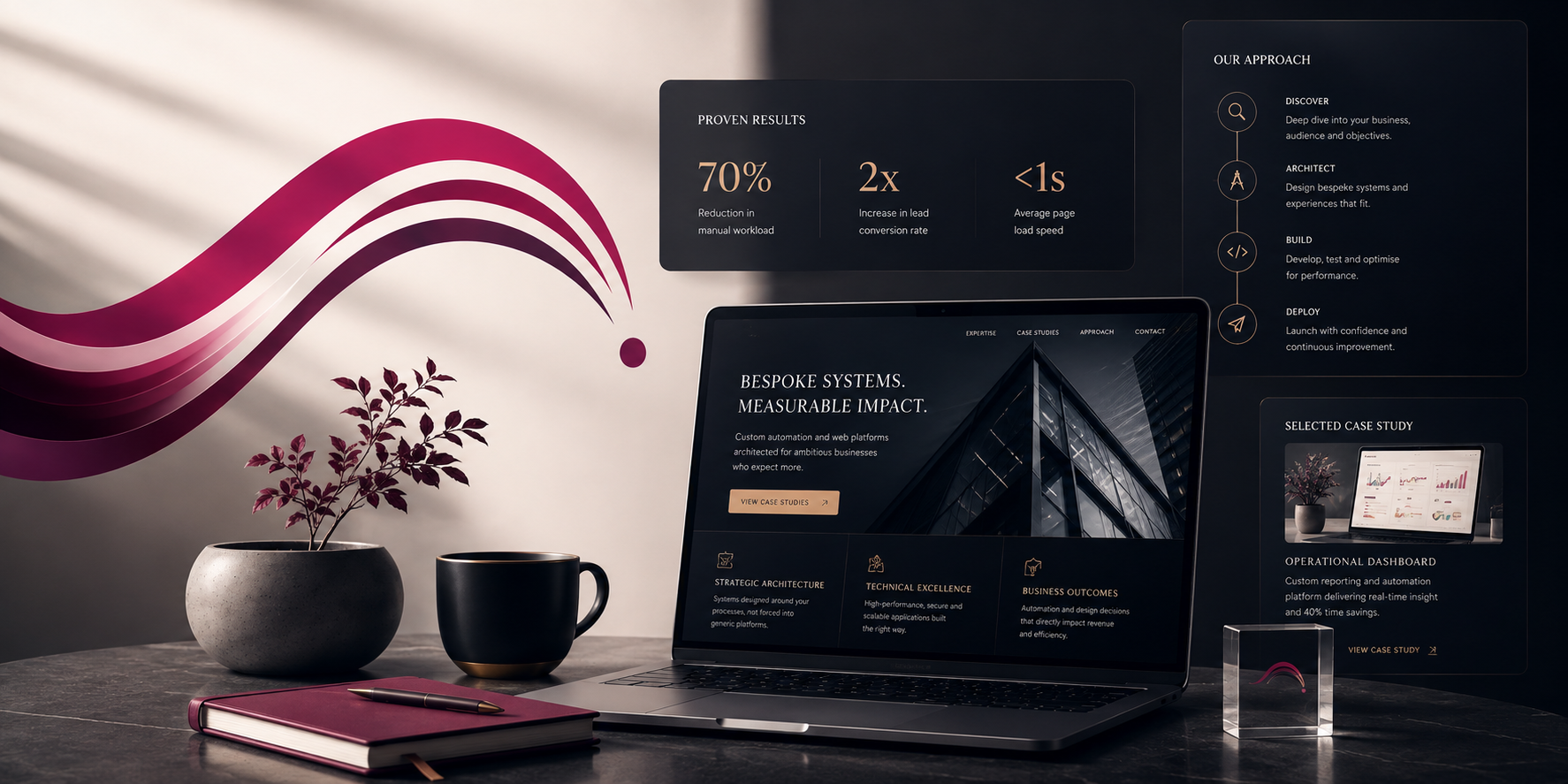
Explores the visual psychology of immediate B2B trust, technical performance optimizations, and structuring clear conversion paths for high-net-worth buyers.
Architecting Web Apps That Project Authority and Convert High-Ticket Clients
Introduction
A company’s digital presence is now its primary boardroom. Before a prospective client ever speaks to a salesperson, they’ve already formed a judgement about the business based on how its website looks, feels and performs. If a platform feels clunky, slow or outdated, prospective corporate clients will assume that service delivery suffers from the same operational friction. It’s an unfair leap in some ways, but it’s also a completely rational one: in the absence of other evidence, buyers use the quality of what they can see to predict the quality of what they can’t.
High-converting web architecture isn’t about decorative animation or superficial design flourishes. It’s about establishing unquestioned authority in the first few seconds of contact. Clear positioning, streamlined user experience and genuine technical speed combine to create a digital engine that commands premium market positioning, rather than one that quietly undermines it.
This matters more, not less, as buying committees get smaller and more senior. A single director doing due diligence on a shortlist of vendors at 9pm on their laptop is a common buying moment for high-ticket B2B services, and the website is often the only “meeting” that happens before a decision is made about whether to reach out at all.
1. The Visual Psychology of Immediate Trust in B2B Web Design
Executive buyers form a judgement on a potential vendor within seconds of landing on their site. This isn’t a soft, subjective claim; it reflects how human perception works under time pressure. People scan for pattern-recognition cues, such as alignment, spacing, typographic hierarchy and colour discipline, long before they read a single word of copy. A page that looks considered reads as a business that is considered.
Restrained aesthetics over decoration. Establishing visual authority calls for restrained aesthetics, structured grid systems and high-contrast editorial typography. Busy layouts, excessive gradients, and stock “corporate handshake” photography tend to signal the opposite of what they’re meant to: rather than looking polished, they look templated and interchangeable. Steering clear of generic stock imagery and bloated template layouts signals professionalism and bespoke capability instead.
Lead with proof, not adjectives. Placing clear methodology frameworks, verified case studies and transparent value propositions near the top of the page builds institutional confidence from the first scroll. Vague claims like “results-driven” or “trusted by businesses worldwide” carry no evidential weight on their own. Specific numbers, named outcomes, and honest process descriptions do far more to build trust, particularly with buyers who are used to evaluating vendors professionally.
Typography as a trust signal. High-value buyers are unconsciously sensitive to typographic quality. Consistent type scales, sensible line lengths, and deliberate use of weight and contrast all contribute to a sense of editorial rigour, which in turn implies operational rigour elsewhere in the business.
A note on testimonials. Fabricated or vague testimonials (unattributed quotes, stock headshots, generic praise with no specifics) are increasingly easy for sophisticated buyers to spot, and they do more reputational damage than having no testimonials at all. A shorter list of specific, verifiable, named results will always outperform a longer list of soft, anonymous praise.
2. Technical Optimisations That Dramatically Reduce Bounce Rates
Sub-second page load speed is now a baseline requirement for holding the attention of high-value decision-makers, not a nice-to-have.
Speed and perceived competence are linked. Research shows that load delays beyond two seconds cause bounce rates to spike sharply among corporate visitors, and the effect compounds on mobile networks and older devices. Slow-loading pages don’t just lose visitors; they actively damage the perception of the business behind them, because speed is one of the few technical qualities a non-technical buyer can personally experience and judge.
Framework choice matters. Building on modern frameworks such as Next.js or Astro ensures static assets are served efficiently at the edge, reducing time-to-first-byte and improving Core Web Vitals scores, which Google also uses as a ranking signal. This is one of the places where good SEO practice and good user experience genuinely overlap rather than compete.
Practical technical levers include:
- Image optimisation – serving modern formats like WebP or AVIF, with responsive sizing so mobile devices aren’t downloading desktop-sized assets.
- JavaScript discipline – minimising bundle size and deferring non-critical scripts so the page becomes interactive quickly, not just visually complete.
- Third-party script audits – every embedded chat widget, tracking pixel or marketing tool adds weight; each one should earn its place.
- Caching and CDN strategy – serving static content from edge locations close to the visitor reduces latency regardless of where in the world the buyer is browsing from.
- Core Web Vitals monitoring – tracking Largest Contentful Paint, Interaction to Next Paint and Cumulative Layout Shift on an ongoing basis, not just at launch.
Together, these choices preserve rendering speed across desktop and mobile environments and give search engines fewer reasons to rank a competitor’s faster site above yours.
3. Structuring Clear Conversion Paths Tailored for High-Net-Worth Buyers
Turning high-value interest into active engagement demands a frictionless journey from landing page to first conversation.
One path beats five options. Boutique service platforms should guide visitors along a single, deliberate conversion path rather than presenting them with competing calls to action. A page offering “Book a call”, “Download our guide”, “Join our newsletter” and “Get a quote” all at once forces the visitor to make a decision the business should have made for them. Clarity about the single next step reduces cognitive load and increases the likelihood any action is taken at all.
Reduce form friction. Replacing lengthy intake forms with a streamlined, single-step enquiry field reduces drop-off significantly. Every additional field is a small tax on conversion; each one should be justified by a genuine qualifying need, not by internal habit.
Automate the handoff. Integrating direct calendar scheduling and automated CRM triggers ensures prospective clients get immediate confirmation, keeping sales momentum intact. A gap of even a day between enquiry and response can be enough for a time-poor decision-maker to move on to the next name on their shortlist.
Design for the sceptical evaluator, not the ready buyer. High-ticket B2B purchases are rarely impulsive. Many visitors arrive to evaluate, not to buy immediately, so the site needs secondary paths (case studies, process explanations, FAQs) that build the case for a future decision, not just a single aggressive call to action.
4. Why This Matters for Search Visibility, Not Just Conversion
A fast, well-structured, authority-projecting site doesn’t only convert better; it also tends to rank better, because many of the same qualities that build human trust are the ones search engines are explicitly designed to reward.
- Page experience signals (speed, stability, mobile usability) are direct or indirect ranking factors.
- Content depth and specificity (named methodologies, real case studies, concrete numbers) tends to outperform generic marketing copy for long-tail, problem-based search queries, which is often where high-intent B2B buyers are actually searching, rather than for brand names they don’t yet know.
- Clean, semantic structure (proper heading hierarchy, descriptive page titles, structured data where appropriate) makes it easier for search engines to understand what a page is about and who it’s for.
- Low bounce rates and longer engaged sessions, driven by good UX and fast load times, are read by search engines as evidence that a page is satisfying user intent.
In practice, this means the same architectural decisions that make a site feel authoritative to a human evaluator also make it more discoverable to the buyers who haven’t found it yet.
Frequently Asked Questions
How fast does a B2B website need to load to avoid losing high-value visitors? Aim for under two seconds to first meaningful content, and ideally well under that on mobile. Beyond this threshold, bounce rates climb sharply among time-poor, senior decision-makers.
Do testimonials actually help conversion for high-ticket services? Specific, verifiable testimonials help significantly. Vague or unattributed ones can actively hurt trust, particularly with sophisticated buyers who are used to spotting soft or fabricated social proof.
Is a custom-built site always better than a template for high-ticket positioning? Not necessarily, but generic, unmodified templates are easy for experienced buyers to recognise, and recognition undermines the sense of bespoke capability that high-ticket positioning depends on. What matters is that the finished site looks considered and specific to the business, however it was built.
What’s the single highest-leverage change for improving conversion on an existing site? In most cases, reducing the number of competing calls to action to one clear next step, paired with cutting an intake form down to its essential fields.
Conclusion
Building a web application that converts high-ticket buyers means treating digital design as a core operational capability, not an afterthought bolted on after the “real” work is done. By focusing on visual trust signals, technical performance and frictionless conversion paths, service firms project market authority, improve their search visibility, and win enterprise contracts more consistently.
Digital Sovereignty Audit
Step 1 of 5
Can you update your homepage text yourself in under 60 seconds without emailing anyone?
Ready to build your Digital Engine?
Stop letting your website be a brochure. Let's turn it into a revenue-generating asset.
Book a Strategy Call