How Architects & Creatives Use Portfolio Sites to Justify Premium Pricing
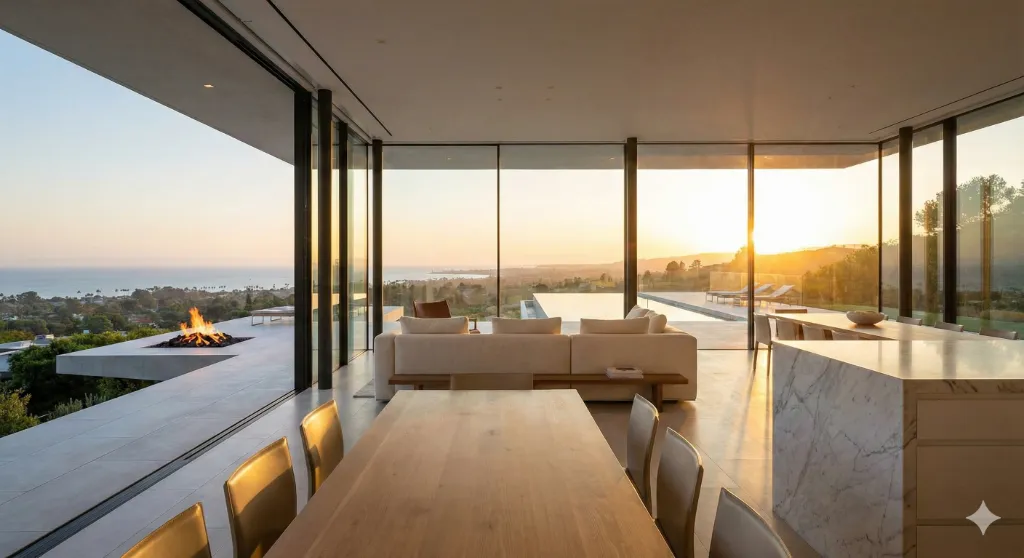
Your website sets the price anchor before you even speak to a client. Learn how high-end design signals value and builds trust.
Imagine you have two meetings today with potential architects for your dream home.
Architect A: Meets you at a Starbucks. They pull out a crumpled folder of printed photos. They are loose and disorganised. Architect B: Invites you to their studio. They hand you a bound, hardcover book of their previous work. The photos are crisp, professional, and tell a story.
Who are you willing to pay more?
You haven’t seen the final drawings yet. You don’t know the price. But you have already anchored Architect B as the “Premium” option and Architect A as the “Budget” option.
This is the psychological power of Presentation. In the digital world, your website is your studio. It is your bound book.
If you are selling a premium service (Architecture, Interior Design, Consulting), you cannot afford a budget website. Here is why.
1. The Concept of “Price Anchoring”
Price Anchoring is a cognitive bias where humans rely heavily on the first piece of information offered (the “anchor”) when making decisions.
- Low Anchor: If your website looks like a £500 DIY template, the client subconsciously anchors your value at £500. If you then quote £10,000, they feel “sticker shock”.
- High Anchor: If your website looks like a £50,000 digital experience (smooth motion, high-end typography, stunning photography), the client anchors your value high. If you quote £10,000, they might actually think it is a bargain.
2. Curation: Less is More
A common mistake is dumping everything you have ever done onto your portfolio page. High-end brands curate.
- The Budget Mindset: “Look at how much work I’ve done! I’m busy!” (Validation seeking).
- The Premium Mindset: “Look at how selective I am. I only do perfect work.” (Scarcity).
Your portfolio should only show the work you want to do more of. If you want to build modern glass houses, delete the photos of the garden shed you fixed 5 years ago.
3. The “Case Study” Format
Don’t just post a gallery of images. That’s Pinterest. Premium portfolios tell a story. They follow the STAR method:
- S (Situation): “The client had a dark, cramped Victorian terrace.”
- T (Task): “They wanted light, space, and a connection to the garden.”
- A (Action): “We obtained difficult planning permission and used structural glass…”
- R (Result): “The home value increased by 40% and the family loves the new kitchen.”
This proves you are a problem solver, not just a decorator.
4. Speed & Interaction (The Subconscious Signal)
We associate “Slow” with “Cheap”. Think about a luxury car door. The “thunk” sound it makes is engineered to sound expensive.
Your website needs that digital “thunk”.
- Pages should load instantly.
- Scroll animations should be smooth, not jerky.
- Images should fade in elegantly.
These micro-interactions signal attention to detail. If you care this much about your website button, surely you care about the structural integrity of my house?
Case Study: Cairn Architects
We recently worked with a boutique architecture firm. Their old site was functional but generic. We rebuilt it with:
- Full-screen cinematic imagery.
- A dark, sophisticated colour palette.
- “Silent” video backgrounds of the team working.
- Deep-dive case studies.
The Result: Their lead volume actually dropped slightly (fewer “tyre kickers”), but their average project value doubled. They stopped attracting people looking for cheap extensions and started attracting developers looking for multi-unit builds.
Conclusion
Your website is the only salesperson that works 24/7, 365 days a year. It is making a price argument for you while you sleep.
Is it arguing for a discount? Or is it justifying a premium?
Ready to build a digital studio that reflects your worth? Contact Us to discuss a portfolio redesign.
Digital Sovereignty Audit
Step 1 of 5
Can you update your homepage text yourself in under 60 seconds without emailing anyone?
Ready to build your Digital Engine?
Stop letting your website be a brochure. Let's turn it into a revenue-generating asset.
Book a Strategy Call